
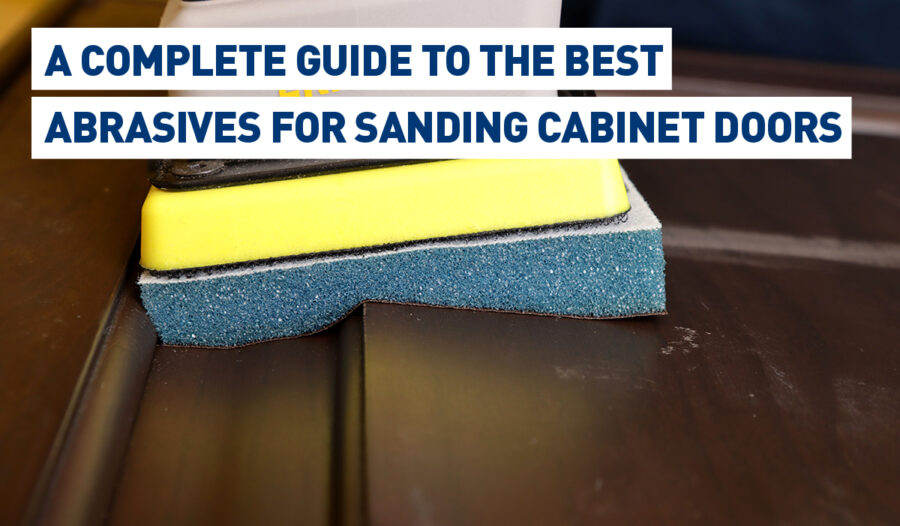
Sanding cabinet doors can be one of the most time-consuming tasks in woodworking and cabinet refinishing. Whether you’re working with flat panels, detailed profiles, or shaker-style doors, choosing the right abrasive system can dramatically improve your results while cutting your sanding time in half.
Understanding Your Cabinet Door Type
Different cabinet door styles require different approaches to sanding. The key is matching the right abrasive to your specific project:
- Flat panel doors need abrasives that can cover large surfaces quickly while maintaining consistent pressure
- Shaker doors present unique challenges with their recessed center panels and raised frames
- Profiled doors with decorative details require flexible abrasives that can conform to curves and contours
The Top Abrasive Options for Cabinet Doors
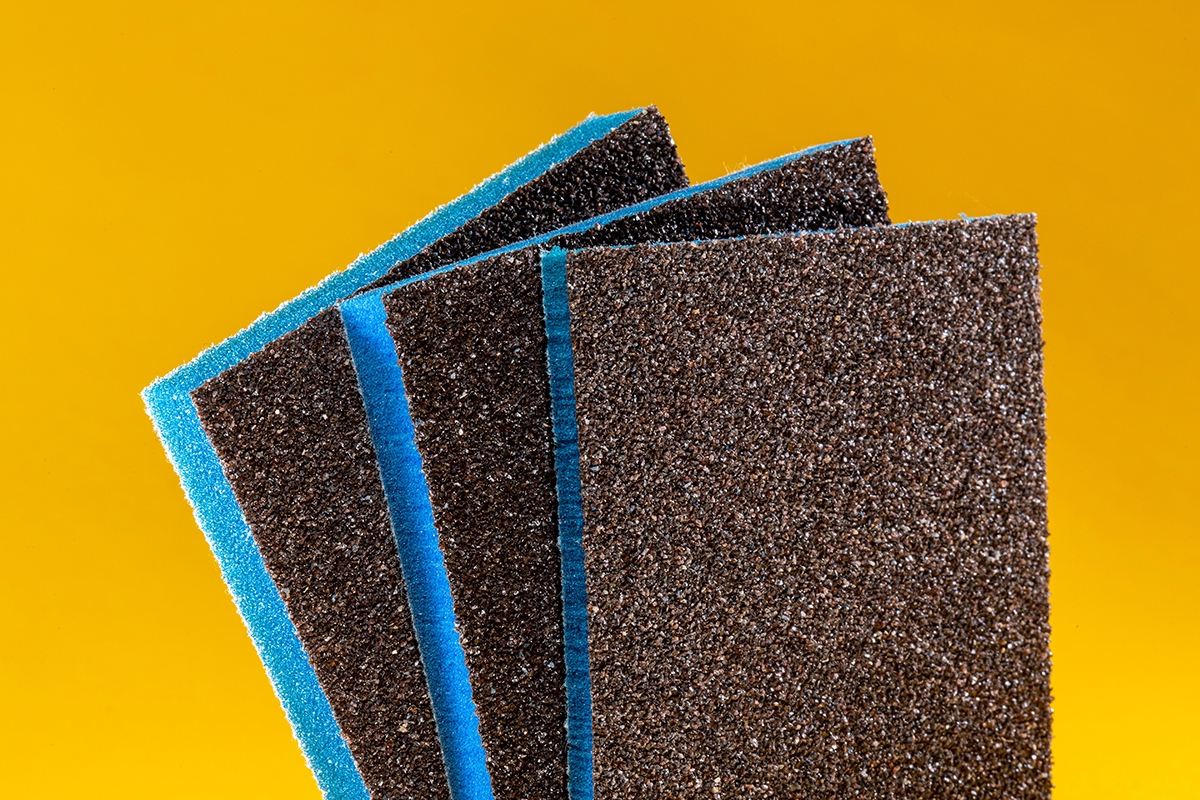
EKASILK PLUS Abrasive Sponges
For finishing or refinishing operations on cabinet doors, foam abrasive sponges represent a breakthrough in sanding technology. These products combine the convenience of machine sanding with the flexibility previously only available with hand sanding.
Key advantages:
- Last up to 30 times longer than conventional abrasives
- Tear-resistant with flexible latex coating that minimizes loading
- Can be washed and reused
- Available with hook and loop backing for use with orbital sanders
Three thickness options for different applications:

5mm Sponges are ideal for flat surfaces and general finishing work. The closed cell foam structure provides enough cushioning to sand over edges and corners without breaking them, making them perfect for large flat panels like refrigerator doors or simple cabinet fronts. They work exceptionally well for finishing with both primer and stain.
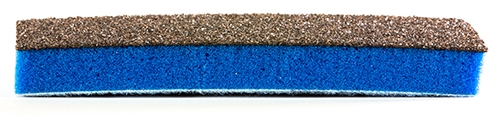
10mm Sponges solve one of the most challenging problems in cabinet sanding: working on shaker doors without damaging the wood. These sponges are dense enough for flat sanding, flexible enough to manage edges and contours, and thick enough to clear the top of shaker door profiles without leaving marks on the internal edges. This eliminates the frustrating damage that conventional abrasives often cause when sanding inside dropped areas and depressions.
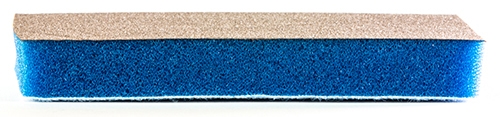
1/2 inch Sponges are designed for contours, dips, grooves, and rounded edges. The thick, flexible, open cell foam structure allows the grain layer to recede into the sponge, matching the shape of your workpiece. This essentially eliminates the need for tedious hand sanding on profiled cabinet doors.
All EKASILK PLUS sponges are available in multiple grades: Coarse, Medium, Medium-Fine, Fine, Very Fine, Superfine & Ultra Fine, allowing you to progress through your finishing stages with the same product system.
More info about EKASILK PLUS sponges HERE
Sanding Discs for Cabinet Doors
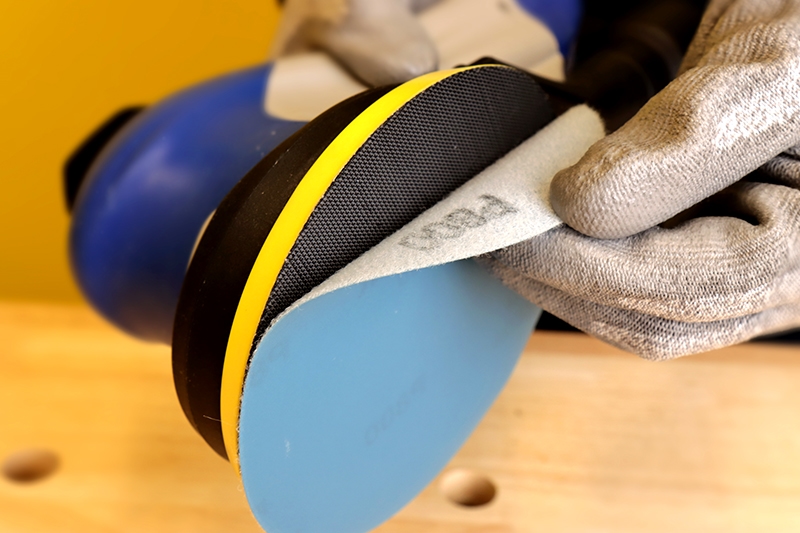
For woodworking operations where disc sanding is part of the production process, especially for flat sanding, quality sanding discs offer the ability to achieve a hand-finished, craftsman-like quality on cabinet doors.
Backing options:
- Paper backing for general purpose sanding
- Cloth backing for heavy stock removal
- Film backing for fine finishing
Attachment methods:
- PSA (pressure-sensitive adhesive or “sticky back”) for permanent attachment
- Hook and loop for easy disc changes
The most common disc sizes for cabinet work are 5 inch and 6 inch diameter. When using dustless sanding systems, look for discs with multiple hole patterns to accommodate your specific sander and ensure proper dust extraction.
Interface Pads
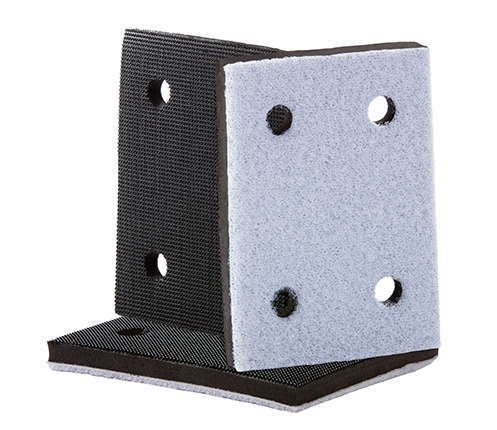
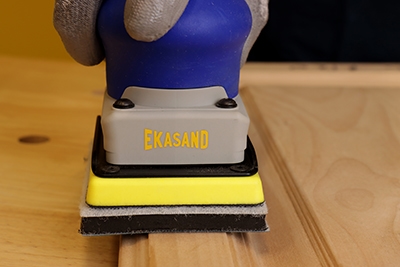
When sanding the center panels of cabinet doors like shaker doors, interface backup pads serve a crucial function. These pads are used with sanding sheets to raise the sander above the wood surface, preventing damage to the profile while still allowing you to sand the center panel effectively. They’re particularly useful for removing knife marks from cutting tools on raw wood and for sanding moldings or other deep profiles.

Wide and Narrow Belts
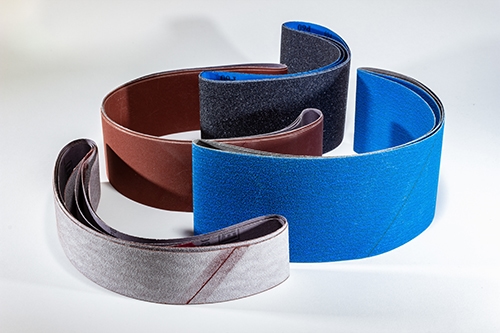
For cabinet manufacturing operations that include milling and calibrating wood to the correct thickness, wide and narrow belts are essential for the early stages of production. These belts help bring your wood to the right thickness and prepare it for the finer sanding stages that follow.
Building an Effective Abrasive System
The key to efficient cabinet door sanding is using a proper abrasive system rather than relying on a single product. A complete system typically includes:
- Initial sanding with coarser grits to remove mill marks and prepare the surface
- Intermediate sanding with medium grits to refine the surface
- Finish sanding with fine and very fine grits between coats of primer or finish
- Final sanding with superfine grits before the last coat
Specialized Considerations
MDF Cabinet Doors vs. Wood Doors: Critical Differences
Understanding the fundamental difference between sanding MDF and wood doors is essential for achieving optimal results:
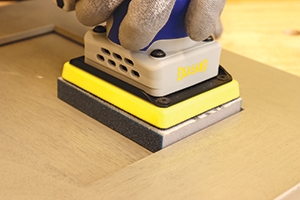 Wood Doors: When sanding natural wood cabinet doors, your goal is to open the wood pores so they can properly accept paint or stain. This means you’re working with the wood’s natural grain structure, allowing finishes to penetrate and bond effectively. The sanding process prepares the surface by creating the right texture for finish absorption.
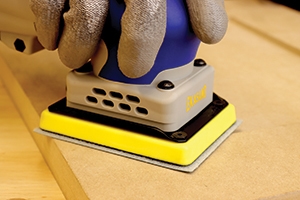 MDF Doors: MDF (Medium Density Fiberboard) requires the opposite approach. Since MDF doesn’t have natural pores like wood, you need to seal the dense fiber surface to achieve a better painted finish. The sanding process for MDF focuses on creating a smooth, sealed surface rather than opening it up. For sanding MDF doors, we would recommend using regular paper backed or film backed abrasives such as our Ekastorm or Filmtek sheets.
Practical Implications:
- MDF generates significantly more dust than wood, requiring more frequent cleaning of abrasives or more frequent changes
- MDF’s dense, uniform composition means it sands more consistently without grain direction concerns
- Wood requires attention to grain direction and may need different techniques for different species
- MDF typically requires a sealing primer before finish coats, while wood can often accept stain directly after proper sanding
Preventing Common Issues
Proper abrasive selection helps avoid swirl marks, one of the most common finishing problems. The best approach is prevention: using quality abrasives, proper sanding techniques, and appropriate accessories from the start rather than trying to fix problems later.
Selecting the Right Sander
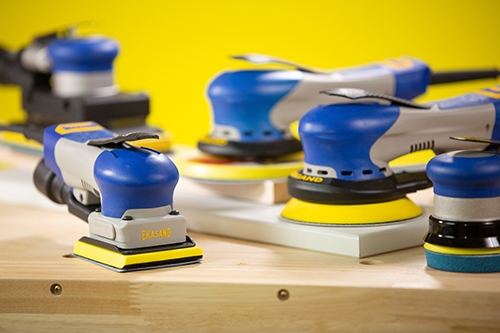
While abrasive selection is critical, pairing your abrasives with the right sander enhances results. Electric orbital sanders have become popular for cabinet door work, particularly 3×4 inch models for their versatility with flat surfaces, 90-degree corners, and tight spaces. For larger flat panels, 6 inch disc sanders offer greater coverage area, while 3-2/3 inch by 7 inch sanders provide speed for large areas with corners.
If your shop is already set up with an air compressor, then we highly recommend using pneumatic sanders for your sanding operation. Pneumatic sanders are very cost efficient, sturdy, last a long time, if you maintain them properly of course, and deliver more power than electric sanders. Electric sanders are the perfect option for those without an air compressor or for professionals who refinish doors onsite.
Conclusion
Choosing the best abrasives for sanding cabinet doors comes down to matching the product to your specific application. Foam abrasive sponges like EKASILK PLUS have revolutionized finishing operations by dramatically reducing sanding time while improving finish quality. Combined with quality sanding discs, proper backup pads, and a systematic approach to grit progression, you can achieve professional results efficiently and cost-effectively.
The investment in quality abrasives pays dividends through reduced labor time, better finishes, and longer-lasting products that ultimately lower your cost per piece. Whether you’re a professional cabinet maker or a DIY refinisher, building the right abrasive system for your cabinet doors will transform one of woodworking’s most tedious tasks into a manageable and successful part of your process.


